Do Engineering Students Need an Oscilloscope?
When an engineering student should use the university lab, wait, or buy a personal oscilloscope for recurring electronics work.
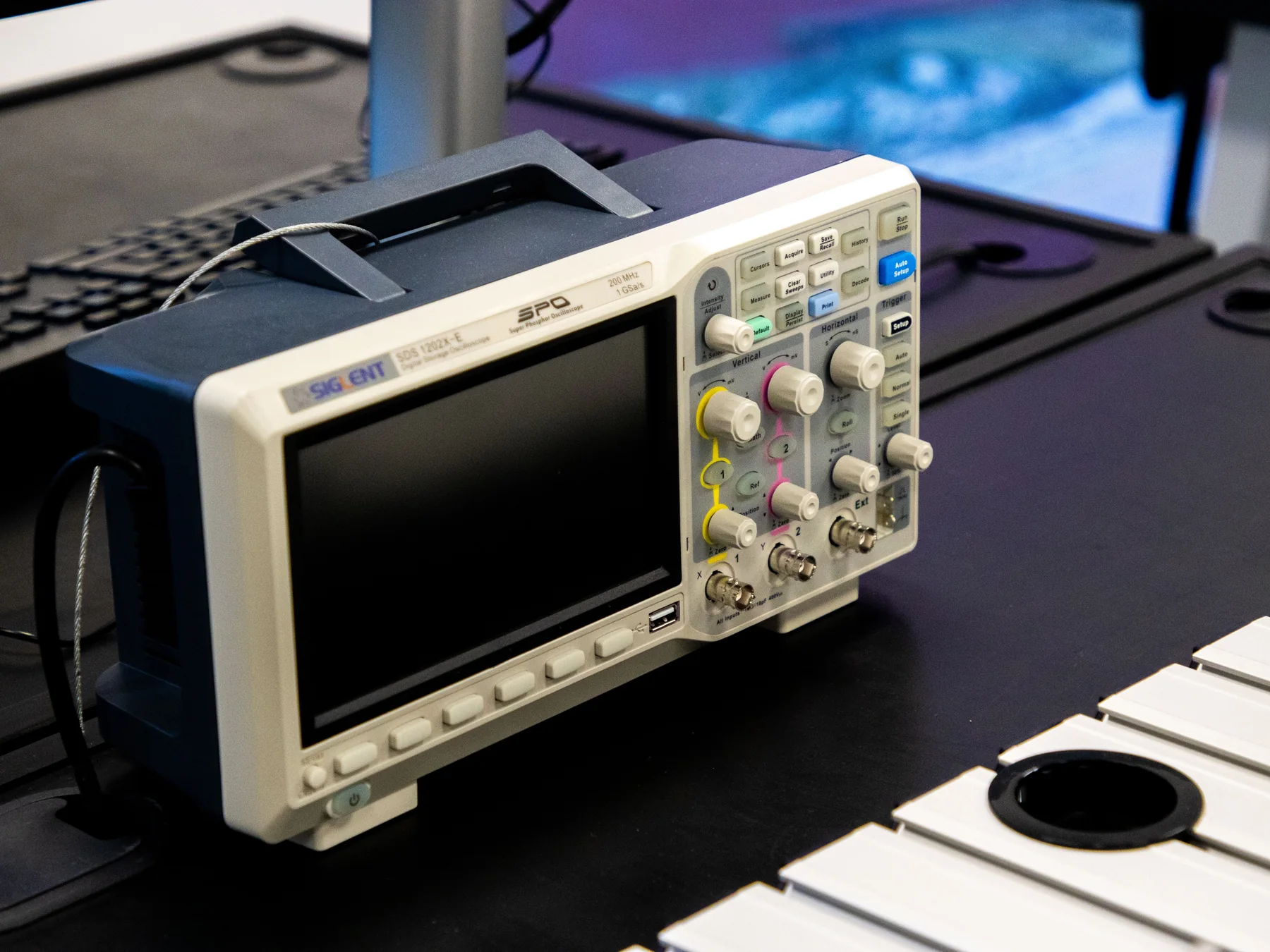
- Published
- August 12, 2026
- Last updated
- August 12, 2026
- By
- BuildGauge Editorial
BuildGauge Verdict
For many early-stage students, personal ownership is not the first move. University laboratories usually provide appropriate instruments, probes, supervision, and course-specific setup. That is valuable while you are still learning what measurements mean and which instrument features matter.
Why laboratory access changes the answer
A lab instrument is already matched to course exercises and maintained by the institution. It also gives you access to teaching support and safety practices that a shopping list cannot replace.
Buying early can lock money into bandwidth, channel count, probes, or protocol features you do not yet understand. That budget may create more learning value in components, a multimeter, a development board, or simply remain unspent.
When owning one becomes useful
Ownership starts to make sense when you debug recurring personal electronics projects away from campus, need access outside lab hours, or repeatedly measure analog behavior and digital buses. A defined use case should tell you what capability class is needed.
For mixed-signal learning, a compact instrument can be useful. For more demanding analog work, a benchtop scope may be appropriate. In either case, verify voltage limits, probes, safety category, bandwidth needs, and software support rather than buying from one headline number.
- You build and debug circuits every month, not once per semester.
- Lab access is genuinely limited for the work you are doing.
- You can state the signal types and measurement range you need.
- You understand the safety limits of the instrument and probes.
Signs you should still wait
If your only planned work is an introductory lab, an Arduino tutorial, or a hypothetical future project, wait. If you cannot yet explain what signal you need to observe, use supervised equipment and learn the requirement first.
BuildGauge is comfortable recommending no purchase. A scope becomes worth buying when access and recurring work-not enthusiasm alone-create the need.
What an oscilloscope does that a multimeter cannot
A multimeter reports values such as voltage, current, and resistance. An oscilloscope shows how voltage changes over time, which helps reveal noise, timing, ringing, duty cycle, and events that a single numeric reading hides. That difference matters when debugging clocks, communication buses, amplifiers, power electronics, or transient behavior. It matters much less when an exercise only asks for a steady DC measurement.
The instrument does not interpret the circuit for you. Trigger setup, grounding, probe compensation, bandwidth limits, and sample behavior can all change what appears on screen. A supervised laboratory is therefore not merely free access; it is part of learning to make valid measurements. Owning hardware before learning those foundations can produce confident but incorrect conclusions.
Choose channels, bandwidth, and probes from signals
Two channels cover many introductory comparisons, while four channels help when several rails, logic signals, or input/output relationships must be observed together. Bandwidth should follow the fastest meaningful edge or frequency in the project, with margin. Buying the largest advertised number can sacrifice usability, support, or probe quality without improving the measurements you actually make.
Probe rating and technique are part of the safety system. Standard earth-referenced bench scopes can create dangerous shorts when ground clips are placed incorrectly, especially around mains-referenced or high-energy circuits. Differential measurements and power electronics require appropriate equipment and training. A low-voltage USB instrument is convenient for embedded work but is not permission to probe arbitrary circuits.
| Recurring work | Likely access choice | Priority |
|---|---|---|
| Course labs only | University laboratory | Instruction and correct setup |
| Low-voltage embedded projects | Compact mixed-signal tool may fit | Digital/analog visibility and software support |
| Regular analog bench work | Bench scope may fit | Channels, probes, triggering, and safe limits |
| Mains or power electronics | Supervised specialist equipment | Training and rated measurement system |
A lower-cost measurement path
Begin with access, not ownership. Use scheduled labs, open bench hours, equipment loans, makerspaces, or an instructor's recommended kit. A dependable multimeter and a small logic analyzer can solve many beginner problems at lower cost, although neither replaces an oscilloscope for analog waveforms. Simulation can teach expected behavior, but a simulated trace does not prove a physical circuit behaves that way.
When access becomes the bottleneck, keep a short log of projects and missed work. If you repeatedly travel to campus only to make routine low-voltage measurements, a personal instrument may now save meaningful time. That evidence also tells you whether a compact mixed-signal device or a bench scope fits better than an impulse purchase based on reviews.
The five-question ownership check
Before buying, name the signals, their expected voltage and speed, the number of simultaneous channels, where the instrument will live, and who will teach safe use. Then price the complete measurement setup, including probes, leads, adapters, storage, and any software limitations. A scope that consumes the whole tool budget may delay components and projects that would create the reason to use it.
Also ask how often the device will be used after the current class. If the answer is uncertain, wait or buy used only after verifying condition and support. If the answers are concrete and the work is recurring, ownership can turn a desk into a productive lab rather than a shelf for an impressive screen.
Examples from the current BuildGauge catalog.
These examples illustrate the product classes discussed above. The advisors rank products from your complete answer set.
Digilent Analog Discovery 3
A compact mixed-instrument learning tool for personal low-voltage electronics and embedded labs when portability matters more than a traditional bench interface.
- Typical planning range
- $350-$450
Rigol DHO804
A compact four-channel bench scope for serious personal embedded and electronics work where a basic two-channel learning instrument would become limiting.
- Typical planning range
- $400-$550
Some links on this page may be affiliate links. BuildGauge may earn a commission if you purchase through them at no additional cost to you. Recommendations are selected independently.
As an Amazon Associate I earn from qualifying purchases.
Turn the guidance into one clear answer.
Tell BuildGauge your budget, existing equipment, and priorities. Every prefilled answer can be changed.